One Bridge to the Next

Watch the Because Foundation's 30 minute film, "One Bridge to the Next"

 Watch

UpComing Events

There are no upcoming events currently scheduled.
View Full Calendar

Sign In

Donald E. Withers Street Medicine Education Fund

Donate
History of Operation Safety Net
Thursday, 26 January 2012 20:16

In 1992, Dr. Jim Withers, an internal medicine physician, began providing medical care to Pittsburgh’s unsheltered homeless population. He partnered with street-savvy formerly homeless individuals and, initially dressing as a homeless person, began to make nighttime street rounds in the alleys and under the bridges of the city. From this initial outreach service other clinical volunteers joined in and Operation Safety Net was born. Today, Operation Safety Net is recognized as one of nation’s first, targeted, full-time street medicine programs. It continues to set the standard for this unique form of health care.

To find out more information about Operation Safety Net, click here.

 
Dr. Michelle Barwell at Gel 2011
Wednesday, 18 January 2012 16:32

As a psychiatrist for Operation Safety Net, Dr. Michelle Barwell delivers mental health care to the homeless - where they live. Here she describes how she goes about this highly unusual and courageous work.

 
Street Medicine: A Brief Overview for DWW
Monday, 05 December 2011 14:42

Dr. Jim Withers composed a brief overview of Street Medicine for the Doctors Without Walls newsletter. In this overview, he shares the history of street medicine and DWW from his perspective. 


Street Medicine – a brief overview

Dr. James Withers

Founder, International Street Medicine Institute and the Operation Safety Net

2011

In 1992, I dressed as a homeless person and made medical visits to the streets of Pittsburgh with a formerly homeless man.  The premise as a teaching physician was to find a “classroom” that would allow the students to work in the reality of the alienated and excluded poor of our city. 

When it started, there was no template to deliver care except for some wilderness medicine training and trips.  We listened and tried to understand the circumstances of the street homeless – eventually working in partnership to address the loose ends of their health care.  My backpack got bigger and others joined the work. We created Operation Safety Net with the mission that nobody falls through the cracks to simply die on the streets.

One of the fortunate aspects of the story we had formerly homeless partners from the beginning leading the way.  My longtime friend Mike Sallows was the initial guide to the streets and continues to work with me every week on our walk rounds.  We continue to have formerly homeless persons on each outreach team searching for the hidden homeless … the teams usually include a nurse, physician, medical student and social worker.   To provide more in-depth interaction there is a large mobile home where patients can be examined in private.  All street medicine programs build from the streets up so everything is grounded in the reality of the unsheltered homeless.

At the core, I sought to base our work on the streets (“street medicine”) on a deep philosophical basis that would meet people in their own reality.  Much of health care is based on making people come to where medicine is forcing them to fit into the boxes designed for the comfort of practitioners.  This excludes those who cannot come to systems but need doctors and nurses where they are. The current system distorts healing for those most needing it most.

The street work is a chance for a fresh start … to challenge medical colleagues to join in the “out there” where real people are in need.  Many respond positively, others feel threatened, but the exploration of reality is an essential part of the dialogue.  Such open dialogue will succeed in shaping the nature of health care.

Currently a staff of 21 offers a wide array of social services that specifically target the street homeless population.  Support comes from a variety of sources … private donations, grants and volunteer efforts.  Medical coverage is 24/7 and a toll free number is available for any homeless person, Emergency Room staff member or other concerned people.  Within 24 hours in-person follow up occurs on the needs identified.  This allows the construction of treatment plans for each person.  A hospital consult service is an example of how to use every opportunity to work towards the goal of better health immediately.  Street Medicine programs save hundreds of thousands of dollars in health care and other costs for the larger community each year.  Since 2007 over 700 chronically homeless individuals have moved into their own apartments. Over 100 students work with us each year from a wide array of disciplines. A naturally multi-disciplinary model is more of a community approach than a specialist focused one. 

Street medicine is far more than a delivery model for health care.  One of the most critical elements of street medicine programs are they create the framework upon other efforts can be built to serve the street homeless.  For example, through ongoing trusting relationships with the street homeless, nine (9) law firms that assist people with their legal issues.  Virtually any organization such as our local domestic violence agency or our psychiatric systems can connect with the most vulnerable who were previously “out of reach”.  I have seen this play out strongly with DWW and other street medicine programs throughout the US and abroad.  The fabric of community is literally woven and extended to link us all together.

Because street medicine programs “go to the people”, they are incredibly strategic as an interface between the street homeless and the larger community.  As such, we have an opportunity and moral obligation to humanize our communities.  Each encounter with our friends on the street is a chance to show that there are those who care deeply about them.  We try to listen and fully engage the reality that they experience.  Often just being able to express the story fully is a tremendous benefit for those who have been dismissed by society.  Healing begins with listening.  And as we have dialogue with those in the larger community, we can address the prejudices and frustrations they hold.   Ideally, the frank exploration of reality – without judgment or condition – can create the groundwork for healing at the community level.  But for each person on the street, it means listening to the specifics of their situation and finding a way to partner with them in such a way that we share the reality that they experience daily. 

I am delighted and inspired to have witnessed the birth and growth of Doctors Without Walls.  In a way it is like seeing the miracle of Operation Safety Net happen all over again, but with different challenges and victories.  I had the advantage of a large mission based parent organization to which I could relate – though we had to largely fend for ourselves in terms of funding and community relationships.  For you all, it has been much more of a “wilderness experience”.  Where other programs might depend on an existing structure, DWW relies of the willingness of volunteers to share in the responsibility to meet the needs of those you serve.  I am convinced it has made you a better organization despite the challenge.  Mimi, Jennifer and now so many others like Jason, Laura, Marguerite and the student leaders have become heroes to me by your example of dedicated volunteer service.  It is my sincere hope that you will receive the support in your community to allow you to do even more. 

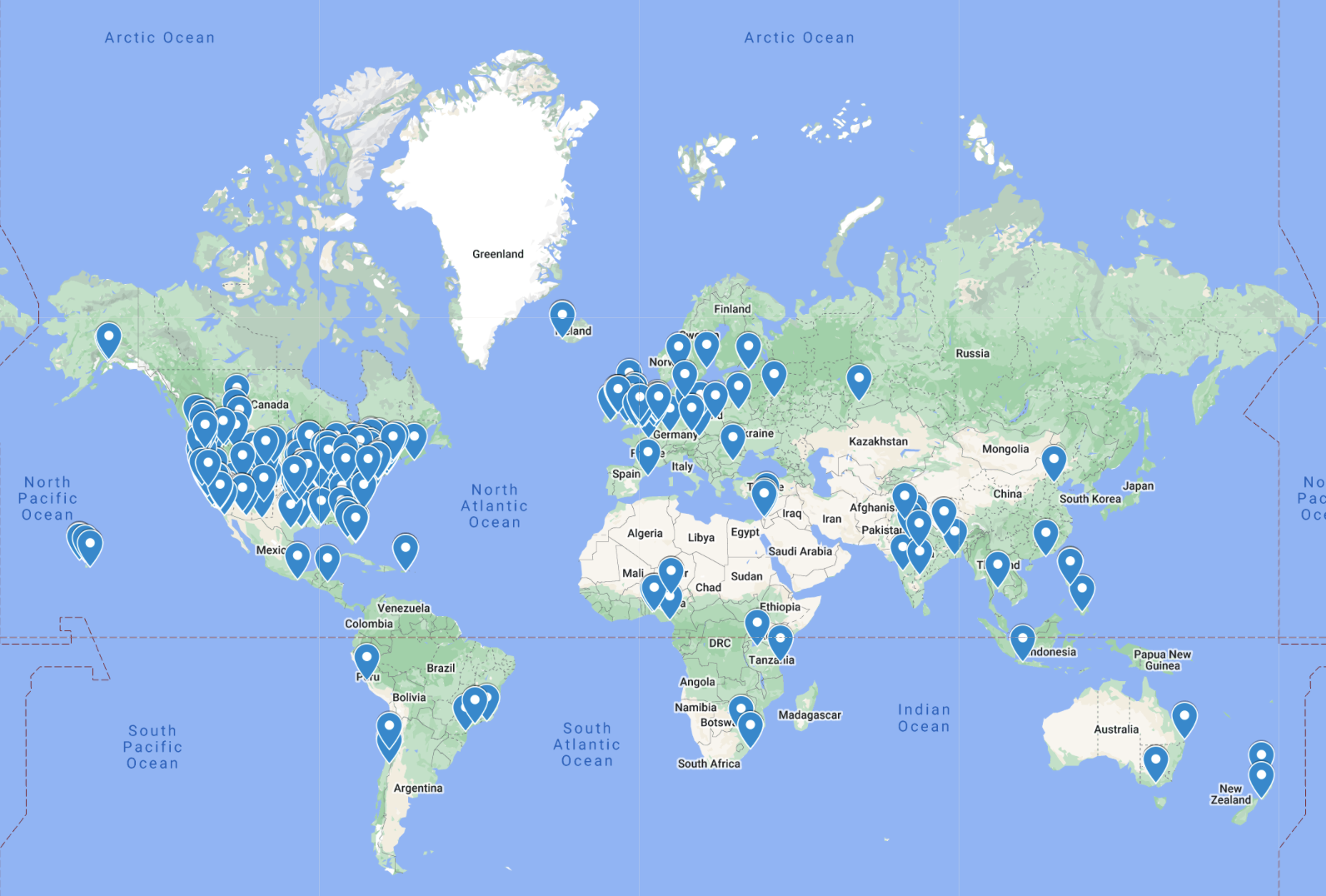
Street medicine has become a global movement.  Since I first connected with Dr. Jack Preger in Calcutta in 1993, a network of over 80 communities practicing street medicine has emerged.  It is essential that we support each other.  For most of those practicing street medicine, we are largely “homeless” ourselves in our own communities.  Not only is the practice not recognized, but the values we hold that prioritize the value of the most vulnerable are also not embraced by main stream health care.  As I traveled to communities throughout the US and other countries, I sensed a burning desire amongst street medicine practitioners to link together for insight and encouragement.  To bring them together, we created the annual International Street Medicine Symposium in 2005.  The first was held in Pittsburgh, the second was in Santa Barbara.   At this time we have had 7 highly successful symposia and are planning our 8th for October 2012.  These have begun to build the kind of unity that is needed to validate street medicine as an actual field of medicine.  In 2008, we officially launched the Street Medicine Institute.  Both the annual symposium and the Institute were made possible by the generous support of GlaxoSmithKline.  This Street Medicine Institute is now the “home” of street medicine (www.streetmedicine.org) and will serve the following four key purposes:

-        To assist communities seeking to establish their own street medicine programs.

-        To define and improve the practice of street medicine

-        To host the annual International Street Medicine Symposium

-        To provide educational opportunities (such as the Street Medicine Fellowship) 

The future of street medicine resides in the innate quality of active social justice.  Those working directly with the rejected of their communities challenge others sitting on the side lines.  Barriers are broken down and reality-based solutions are found.   The beauty is solving problems together. 

The essence of street medicine is the Golden Rule – doing as we would have others do if we were in their shoes.  This requires us to believe others are worthy enough to deserve our compassion … and we are ultimately connected as brothers and sisters. 

The Street Medicine Institute is incredibly proud of these accomplishments.  We remain committed to working in solidarity with others to fulfill the vision of street medicine as a source of true healing. 

 
Street Medicine Training at Berkeley
Monday, 05 December 2011 14:29

Jim Withers, Suzanne Atkinson, and Mimi Doohan presented Street Medicine Training at Berkeley in October 2011.
The videos from the training are available to view online here.

 
<< Start < Prev 1 2 3 4 5 6 7 8 9 10 Next > End >>

Page 1 of 12